Seven checks you can safely make yourself when the air conditioning stops cooling, the one Louisiana cause almost nobody mentions, and the exact point where federal law says you have to stop and call a certified technician.
Why your AC is not cooling, and what you can check yourself
Most systems that stop cooling fail for a reason you can find in ten minutes without tools: a thermostat setting, a tripped breaker, a blocked filter, ice on the coil, a blocked outdoor unit, closed vents, or a full condensate pan. Work through those seven before you pay anyone. The ones past that point are not legal for you to touch.
Key Takeaways
- Two breakers feed a split system, not one. Most people check the wrong one.
- A clogged condensate drain trips a safety switch and shuts the system down completely. In Louisiana humidity, this is one of the most common causes, and almost no national article mentions it.
- If there is ice anywhere, switch the thermostat to FAN and leave it there. Turning the system off entirely is slower.
- Federal law stops you at refrigerant. You cannot legally buy it or connect gauges without EPA Section 608 certification.
- A maintenance visit prevents five of these seven causes, rather than an emergency repair.
Louisiana is a harder place to own an air conditioner than the advice online assumes. NOAA engineering weather data for Baton Rouge puts the city at 2,625 cooling degree days a year, with July and August alone accounting for nearly a thousand. Your system does not get a real off-season here. It also means the humidity side of the job never lets up, and that is where a surprising number of no-cooling calls actually come from.
Work through these seven in order. They cost nothing, they take about ten minutes, and they are the same checks we run on the phone before agreeing to drive out.
No time to troubleshoot? If the house is already unbearable or someone in it is vulnerable to the heat, skip the list and call. Southern Dreams answers the emergency line around the clock. Call (225) 772-4703. Book a visit online
1. Is the thermostat actually asking for cool air?
Start with the least dignified possibility, because it is more common than anyone admits.
Confirm the mode is set to COOL rather than HEAT, AUTO, or OFF. Set the target temperature at least three degrees below what the room is reading right now. If the display is blank, dim, or frozen, change the batteries before you assume anything else is wrong.
One more thing to check on a smart thermostat: a schedule or geofence can quietly hold the setpoint high while you are out, then take an hour to catch up once you are home. That is not a broken system.
2. Have you checked both breakers?
This is the single most common thing people get wrong, because a split system has two power feeds, and most homeowners only know about one.
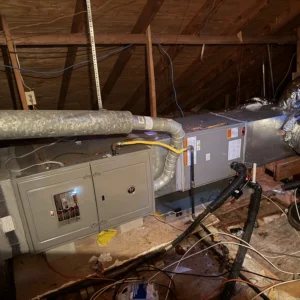
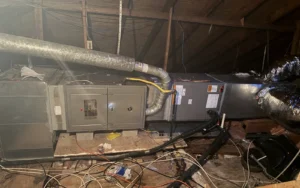
The indoor air handler runs off one breaker. The outdoor condenser runs off another, usually a double-pole breaker in the panel, plus a pull-out disconnect in a small box on the wall beside the outdoor unit. If the indoor fan is blowing, but the air is not cold, the odds are good that the outdoor side lost power while the indoor side kept running.
Reset a tripped breaker once. If it trips again immediately, stop. A breaker that will not hold is telling you about a fault, and repeatedly resetting it is how a repair becomes a replacement.
3. Can you see light through the filter?
Pull the filter and hold it up to a window or a lamp. If you cannot see light through it, it is blocked, and a blocked filter starves the system of the airflow it needs to move heat.
The Department of Energy’s home cooling guide puts it plainly: a clogged filter restricts airflow through the unit, reducing efficiency and its ability to cool. ENERGY STAR recommends checking the filter every month during heavy-use months and changing it at least every three months. On a system that runs this hard for this much of the year, that restriction is what tips a struggling unit into not cooling at all.
We have written separately about how often filters actually need changing in this climate, because the standard three-month guidance assumes a system that runs far less than yours does.
4. Is there ice anywhere on the system?
Check the copper lines where they enter the indoor unit, and check the coil if you can see it. Ice is a symptom, never the problem itself, and it always means one of two things: restricted airflow or low refrigerant.
If you find ice, switch the thermostat to FAN ON and leave the cooling off. Running the blower alone melts the ice far faster than switching everything off, and you cannot diagnose anything underneath a block of ice. Expect one to three hours.
While it thaws, put a towel down. A frozen coil that melts all at once can overwhelm the drain, which leads directly to the next check.
5. Is the condensate drain backed up?
This is the one almost no national article mentions, and in South Louisiana it belongs much higher up the list than it usually sits.
Your system pulls water out of the air constantly here. That water leaves through a condensate drain line, and when algae or debris blocks it, the pan fills. Most modern systems have a float switch in that pan whose entire job is to shut the system down before water reaches your ceiling. The system then looks completely dead, or runs the fan without cooling, and nothing appears wrong.
Find the drain line, typically a white PVC pipe near the indoor unit or exiting an exterior wall. If the pan has standing water, or the line is dripping, and nothing is running steadily on a humid day, that is your answer. Clearing the access tee is a ten-minute job on a maintenance visit.
Worked through these and it is still not cooling? That is a call, not a form. Call any hour, and somebody picks up. Call (225) 772-4703. Book a visit online
6. Is the outdoor unit running and clear?
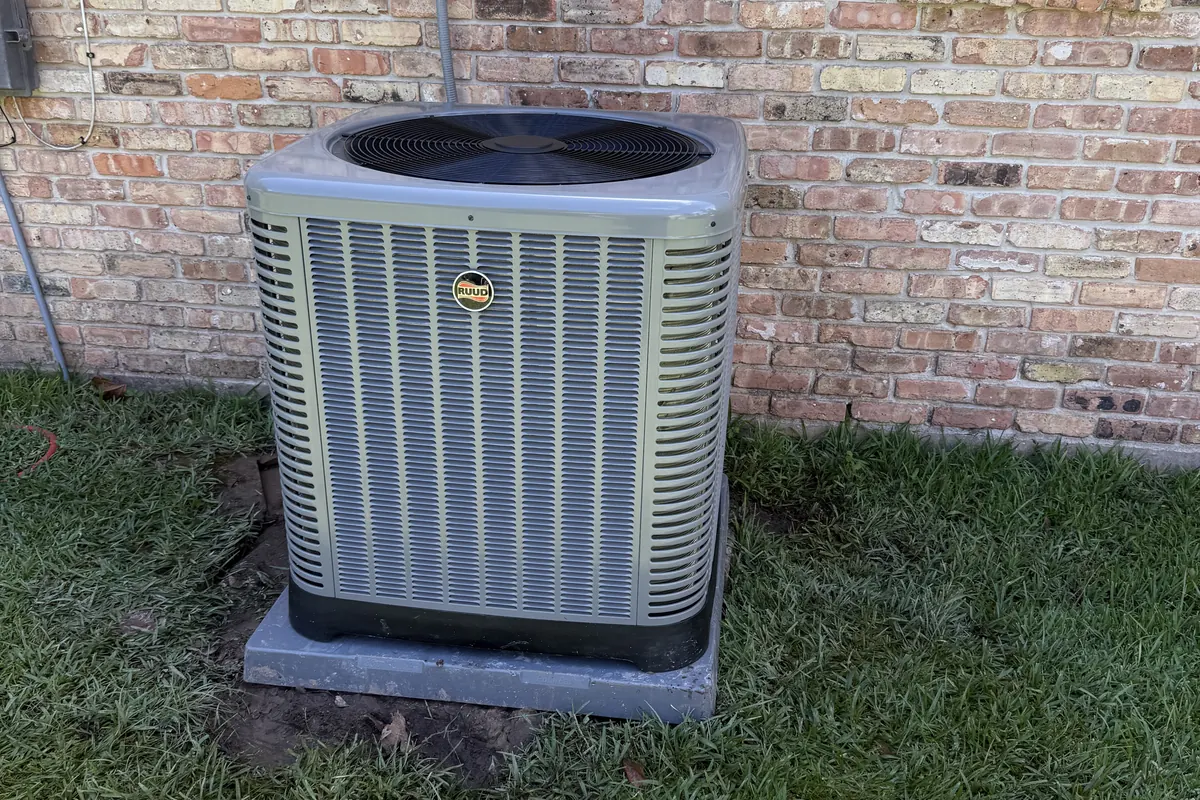
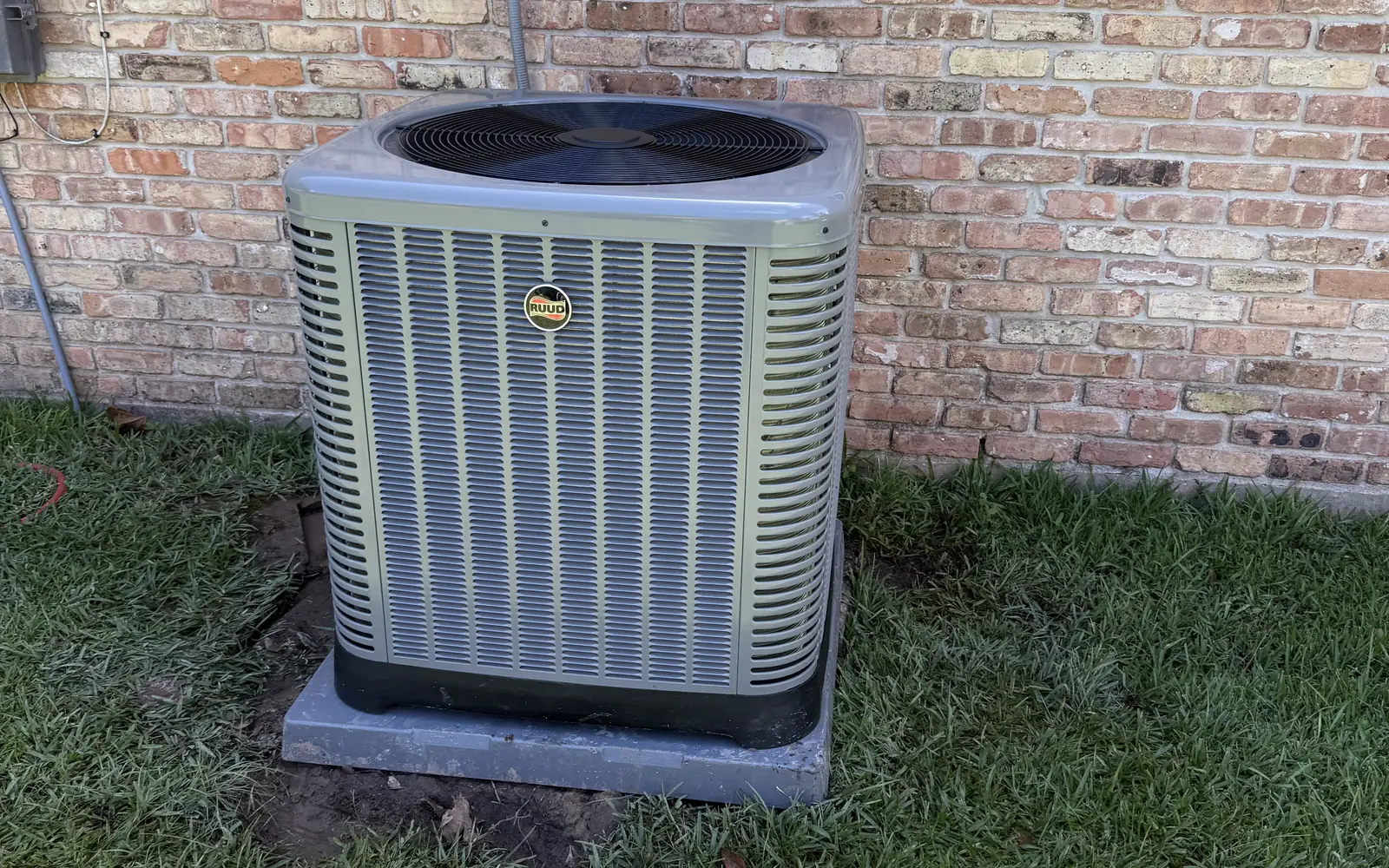
Go outside and listen. The fan on top of the condenser should be spinning, and the unit should be humming. A silent outdoor unit while the indoor fan runs points straight back to check number two.
If it is running, look at it properly. Grass clippings, cottonwood, leaves, and a shrub grown too close all restrict the airflow the unit needs to dump heat outside. You want roughly two feet of clear space on all sides. A gentle rinse with a garden hose from the outside in, with the power off at the disconnect, is safe and often makes a measurable difference.
Don’t pull the top off or reach inside. Capacitors inside can hold a charge even with the power off.
7. Are the vents and returns actually open?
Walk the house. Closed supply registers in unused rooms, furniture pushed against a return, a rug over a floor vent, a closed door starving a return in a bedroom: each one restricts airflow, and enough of them together will make a healthy system look broken.
Closing vents to “save money” in unused rooms is one of the most persistent pieces of bad advice in homeownership. It raises static pressure across the system, which reduces airflow everywhere, which is the same condition that freezes coils.
Where you have to stop, and why it is not optional
If you have worked through all seven and the system still is not cooling, the remaining causes are refrigerant, the compressor, the capacitor, the contactor, or the control board. Every one of those is where the homeowner side of the job ends.
That is not a contractor protecting his trade. Under Section 608 of the Clean Air Act, handling refrigerant requires EPA certification, and without it, you cannot legally connect gauges to the system or buy R-410A at all. The cans sold for car air conditioning are not the same thing and will not work on a home system.
This is the point where HVAC repair stops being a homeowner job. The capacitor is worth a specific warning. It stores enough charge to injure you badly after the power is off, and it is the single most common failed part in a residential system. It is also cheap and quick to discharge safely with a meter and the right training.
What all of this says about maintenance
Look back at the seven. A blocked filter, a fouled condenser coil, a clogged condensate line, and the airflow restrictions that cause icing are all maintenance items, not repairs. They’re why a system quits in July, and they’re cheaper to prevent than to fix at 9 pm on a Saturday.
That is the honest argument for a maintenance plan, and the honest counterargument too. If you genuinely change your own filters, keep the outdoor unit clear, and flush the drain line, you are already doing most of what a visit covers. What you cannot do is check refrigerant charge or test a capacitor under load. Decide if that is worth the difference.
Questions we get when the AC quits
These come up on nearly every no-cooling call. If yours is not here, our full HVAC question list covers more, or you can ring us and ask.
Why is my AC running but not blowing cold air?
The most common answer is that the indoor side has power and the outdoor side does not, so the fan circulates air that never gets cooled. Check the outdoor breaker and the disconnect beside the condenser first. If the outdoor unit is running normally, look at airflow restrictions and ice next.
Can I add refrigerant to my AC myself?
No. Section 608 of the Clean Air Act requires EPA technician certification to handle refrigerant, and homeowners cannot legally buy R-410A. A system that is genuinely low on refrigerant also has a leak, because refrigerant is not consumed. Topping it up without finding the leak means paying for the same repair again.
How long should it take my AC to cool the house down?
On a very hot Louisiana afternoon, expect roughly one degree of drop per hour once the system is running properly, and less if the house started out badly heat-soaked. A system that has been off all day will not recover in twenty minutes, and that is not a fault.
Why does my AC work at night but not in the afternoon?
That pattern usually points to a system that is marginal rather than broken. It can keep up when the outdoor temperature drops and fails once the load peaks. Low refrigerant, a weak capacitor, a dirty condenser coil, and undersized ductwork all produce it, and it tends to get worse rather than resolve itself.
Should I turn the system off completely if it is not cooling?
Not if there is ice on it. Switch to FAN ON, so the blower can melt the ice, then turn cooling back on once it is clear. If there is no ice and the system is running without cooling, switching it off does no harm and stops it from running up a bill for nothing.
Still not cooling after all seven? The rest needs gauges and a meter. Southern Dreams Mechanical covers Denham Springs, Baton Rouge, Livingston Parish, Covington, and Saint Francisville, and answers emergency calls around the clock. Call (225) 772-4703. Book a visit online
Last updated September 16, 2026