If the outdoor unit went underwater, switching it on is what turns a repairable unit into a replacement. Here is the ten-minute check to run before the power comes back: the waterline test, what to photograph for your claim, and when to stop and call.
Key Takeaways
- If the outdoor unit was underwater, do not switch it on. Water in the compressor or contactor turns a repairable unit into a replacement.
- Turn the system off at the thermostat and the breaker before power is restored. Returning power surges through equipment that is mid-restart.
- Photograph everything before touching it. Flood and wind damage are usually insurable; failure from running a wet unit often is not.
- Hurricane season runs 1 June to 30 November, with the statistical peak around 10 September.
After a storm the instinct is to get the air back on. In Livingston Parish we all remember what water does to a house, and cooling feels like the first step back to normal. But the ten minutes before you flip that breaker decide whether you are looking at a service call or a new system.
Before the power comes back
Turn the thermostat to off and switch off the HVAC breaker while the power is still out. When utility power returns it does not return cleanly, and a compressor caught mid-restart by a surge is the failure you are trying to avoid.
Restoration is rarely one clean switch. Power can come back, drop, and come back again inside a minute. A compressor that tries to start against high head pressure during that sequence can draw enormous current. Leaving the breaker off until the supply has been stable for a few minutes costs nothing and removes the risk entirely.
Did the outdoor unit go underwater?
This is the one question that changes everything. If floodwater reached the top of the concrete pad or higher, the unit needs inspecting before it runs, not after. Running a flooded condenser is what turns a $400 repair into a $6,000 replacement.
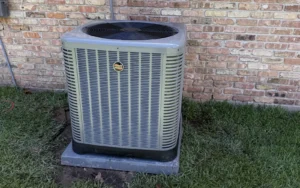
Look for the waterline. Mud, grass and debris leave a mark on the cabinet, and it is usually obvious the next morning. Then use the table below.
| Waterline | What is at risk | What to do |
|---|---|---|
| Below the pad | Little: debris in the coil at most | Clear debris, check the coil, run normally |
| Up the base of the cabinet | Contactor and low-voltage wiring | Leave the breaker off. Have it checked before running. |
| Above the electrical panel | Contactor, capacitor, compressor terminals | Do not run it. Full inspection first. |
| Fully submerged | Compressor windings, board, all electrics | Do not run it. Photograph it. Call your insurer and us. |
Why running it makes things worse. Water in a sealed compressor mixes with the oil. Start it and the pump circulates a slurry through the bearings and windings. The unit may run for a few days and then fail permanently, and at that point the damage looks like a mechanical failure rather than flood damage, which matters a great deal to an insurance adjuster.
What to photograph, and why it matters
Photograph the waterline on the cabinet, the debris field around the unit, any physical damage, and the serial plate. Do it before anyone touches anything. Flood and wind damage are generally claimable; a compressor burned out because the unit was switched on wet often is not.
- The waterline against the unit, with something in frame for scale
- The serial plate: model and serial number, which every claim asks for
- Debris and displacement: a unit shifted on its pad is wind or flood damage, plainly
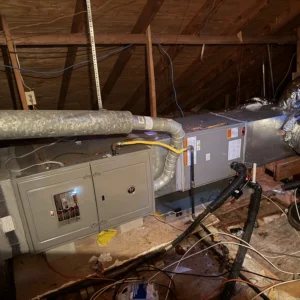
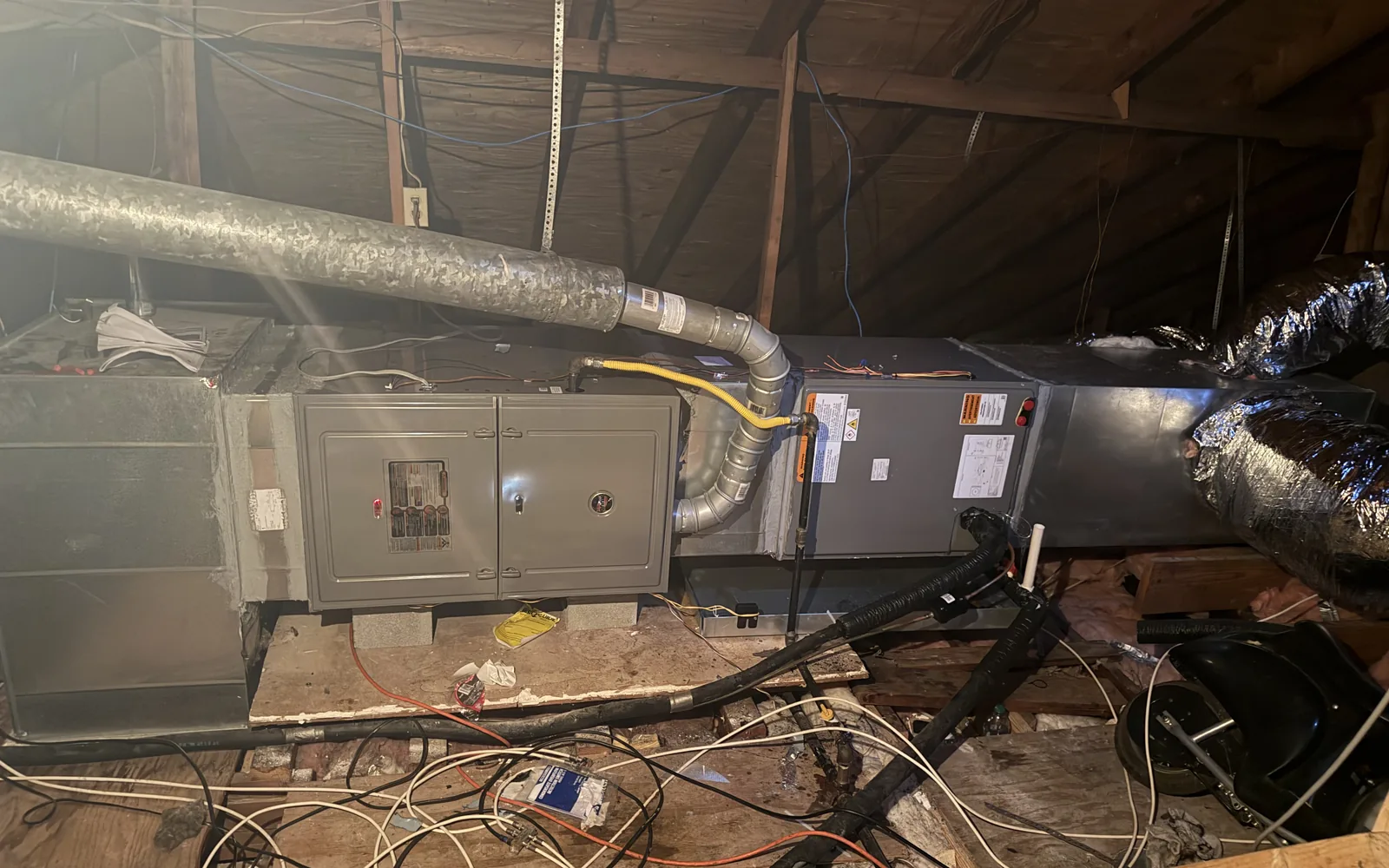
- The indoor equipment, if water reached the air handler or ductwork
Timestamped photos taken before restoration are worth more than any description written afterwards.
Flood damage and wind damage are two different claims
Water that rose and wind that threw something are handled by two separate policies. Most property insurance covers wind and excludes flood, and flood is a policy you buy on its own through the National Flood Insurance Program or a private carrier. Which one pays for your system depends on what actually damaged it.
That distinction decides who you call first, and it is worth sorting out before anybody starts cleaning up. A condenser knocked over by a flying limb is a wind claim. The same condenser sitting in eighteen inches of standing water is a flood claim, and if you carry no flood policy there may be no claim at all.
| What happened to the equipment | Usually a claim under | What the adjuster will want |
|---|---|---|
| Debris strike, unit shifted off the pad, fan blades bent, hail damage to the coil | The wind side of your property policy | Photos of the damage and of what caused it, plus the date of the storm |
| Standing water reached the unit, mud or silt inside the cabinet, waterline visible on the housing | A separate flood policy | Photos showing the waterline height, and the equipment’s age and model |
| Both happened to the same house | Both, handled as separate claims | Each carrier sends its own adjuster, and they split the loss line by line |
When both perils hit one property, each company sends its own adjuster to do a line-by-line estimate, and where the cause is genuinely unclear a structural engineer may be brought in to settle it. That is the reason the photographs in the last section matter so much. They are the record of which force did what, taken before anyone moved anything.
Two details catch people out. A flood policy splits building coverage from contents coverage, and permanently installed equipment such as furnaces and water heaters sits on the building side while portable and window air conditioners fall under contents, which is bought separately. Equipment outside the insured building is treated differently again, so an outdoor condenser on a pad is worth asking your agent about by name rather than assuming.
The second is the deductible. Many coastal and hurricane-exposed policies carry a separate hurricane or windstorm deductible, and the National Association of Insurance Commissioners notes these are commonly written as a percentage of the home’s insured value rather than a flat dollar amount. On a named storm that can be a much larger number than the deductible you are used to, which changes whether a smaller repair is worth filing at all.
We are not insurance agents and your policy is the only thing that decides your claim. What we can give you is the part the adjuster asks us for anyway: a written evaluation of the equipment, what failed, and whether it is repairable or finished.
The rest of the checklist
Once you have established the unit was not submerged and power has been stable for a few minutes:
- Clear the condenser. Storms pack leaves, plastic and grass into the coil. Restricted airflow after a storm is the second most common post-storm call.
- Check the drain line. If the system sat off in high humidity, or debris got into the pan, the first cool-down can overflow it.
- Check the filter. If the house was open or the air was full of dust, it may already be loaded.
- Turn the breaker on first, thermostat second. Give the system a few minutes with power before calling for cooling. Most modern equipment wants that delay anyway.
- Listen to the first start. A hum without a start, or a hard clunk, means switch it back off and call.
If it starts and cools, watch it for an hour. Post-storm failures often appear on the second or third cycle rather than the first.
When to stop and call someone
Call rather than retry if the unit was submerged, if a breaker trips more than once, if you smell burning, or if the outdoor fan is not turning while the unit is running. Any of those means continuing will make the damage worse and more expensive.
A breaker that trips is doing its job. Resetting it repeatedly to see what happens is how a fault that would have been a contactor becomes a compressor.
And the obvious one, which is worth stating plainly: if there is standing water near electrical equipment, or you smell gas, stop. Call the utility and the emergency services first. We are not the first call in that situation.
Questions we get about running an AC after a storm
These are the ones the phone rings with in the two days after weather comes through.
Can I run my AC after a hurricane?
Yes, if the outdoor unit did not flood, the power supply is stable, and the coil is clear of debris. If floodwater reached the electrical panel on the unit, have it inspected before running it.
Is a flooded AC unit covered by insurance?
Flood damage is typically handled under flood coverage rather than standard homeowners insurance, and terms vary, so check your own policy. What is more consistent is that damage caused by running the unit after the flood is treated differently from the flood damage itself, which is why photographs taken before restoration matter.
Should I cover my AC unit before a storm?
Covering does little against water and can trap moisture. Switching the system off at the breaker before the storm arrives is worth far more, and clearing loose items from the yard that could become projectiles is worth more still.
When is hurricane season in Louisiana?
The Atlantic hurricane season runs 1 June to 30 November, with the statistical peak around 10 September. Late August through October is when we take the most storm-related calls.
The short version
Breaker off before power returns. Look for the waterline. Photograph it. If it was submerged, do not run it. That decision is worth thousands of dollars and it takes ten seconds.
If the unit came through the storm fine but still is not cooling, the problem is usually somewhere else. Our walkthrough of the seven checks to run before you call anyone covers the thermostat, breakers, filter, ice, and the condensate drain.
Storms are also the argument for having someone who answers the phone. Our take on what maintenance plans actually cost covers the priority-scheduling question honestly, including when it is not worth paying for.
Not sure whether yours is safe to switch on? Send a photo of the unit and the waterline and we will tell you before you flip the breaker. That call costs you nothing and can save a compressor. If it is already running badly, we answer 24/7. Send a photo or call (225) 772-4703.
Last updated September 16, 2026