How a walk-in cooler repair bill in Baton Rouge is actually built, part by part, what pushes it up, where the 41°F food safety line sits while the box is warm, and the signs that replacing the refrigeration system beats repairing it.
What decides a walk-in cooler repair bill in Baton Rouge?
A walk-in cooler repair bill is built from four things: the diagnostic visit, the labor, the parts, and, for refrigerant problems, the leak search and recharge. Which part failed moves the total far more than anything else. A torn door gasket and a failed compressor both count as walk-in repairs, and they sit at opposite ends of the bill.
Key Takeaways
- The failed part decides most of the bill. Gaskets, drain lines and thermostats sit at the small end. Refrigerant leaks and compressors sit at the large end.
- The product in the box is often worth more than the repair. A box running above 41°F is a food safety issue before it is a repair job.
- After-hours visits cost more to get a technician to you. The diagnosis and the parts are the same job at any hour.
- Rooftop condensing units, older refrigerants and how long the box ran while failing all push a bill up.
- A failed compressor on an older system that runs on a phased-out refrigerant is usually where replacing beats repairing.
Baton Rouge is hard on walk-in coolers. NOAA engineering weather data for Baton Rouge puts the city at 2,625 cooling degree days a year, so the condensing unit behind a restaurant or on a convenience store roof spends most of the year pushing heat into hot, wet air. A busy kitchen adds its own heat and steam on top.
That is why nobody can honestly quote a walk-in repair over the phone. What we can do is show you how the bill is put together, so you know what you are paying for, what to ask before work starts, and when a repair stops making sense.
Box warm right now? Keep the door shut, move the product that matters most to another cooler, and call. Somebody picks up any hour, any day. Call (225) 772-4703. Book a visit online
What happens to the food while the box is warm?
Start here, because it decides how fast you need someone and what the visit is really protecting.
The 2026 FDA Food Code requires time/temperature control for safety food to be cold held at 41°F (5°C) or less. It marks that rule as a priority item, the category reserved for provisions that directly control foodborne illness hazards. The same code says the thermometer in a refrigerated unit belongs in its warmest part.
Louisiana draws the same line. The Louisiana Department of Health’s operating guidelines for retail food facilities, revised in 2016, say coolers must hold that food at 41°F or colder and that every cooler or freezer storing perishables must have a numerically scaled thermometer. That thermometer is also your first diagnostic tool.
What you keep and what you discard is a call for you and your food safety plan, not your refrigeration technician. The Food Code expects operators to stop and notify the regulator when an imminent health hazard may exist, so if you are unsure where a dead walk-in falls, ask your parish health unit.
This is why the repair is rarely the most expensive part of a walk-in failure. Lost product and a closed prep line usually cost more.
How is a walk-in cooler repair bill built?
Every walk-in repair bill, day or night, is made from the same few pieces.
| Part of the bill | What it covers | What moves it |
|---|---|---|
| Diagnostic visit | Getting a technician and a stocked truck to you, then finding what failed | The hour you call, and how hard the fault is to trace |
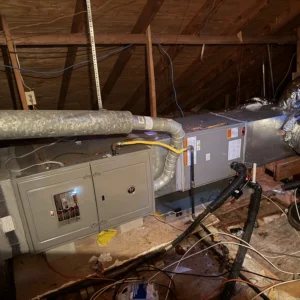
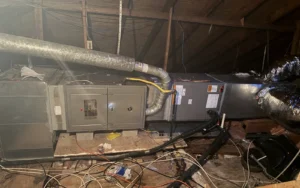
| Labor | The repair itself | Access: a rooftop condensing unit takes longer than one on a pad at ground level |
| Parts | Whatever failed and has to be replaced | Which component it is, and if it is on the truck or has to be ordered |
| Refrigerant work | Leak search, repair, evacuation and recharge | The refrigerant the system runs on, and how hard the leak is to find |
In practice, the parts and refrigerant rows decide most bills. We tell you the diagnostic charge up front and give you a price before the repair starts. Any contractor you call should do both.
After hours, the premium pays for getting someone out at night, on a weekend or on a holiday. Parts change too: supply houses are closed, so a part that is not on the truck can mean a temporary fix tonight and a return visit later.
Which walk-in parts fail, from small repairs to big ones
Most walk-in calls trace back to a short list of components. They are grouped below from the repairs that tend to be modest to the ones that change the conversation.
Door gaskets and closers. These are among the cheapest failures and the most common. A torn gasket or a door that does not pull shut lets warm, wet kitchen air in all day, and the evaporator ices up trying to keep up.
Federal efficiency standards require walk-ins built since 2009 to have automatic door closers and strip doors or another way to limit warm air getting in, so a broken closer or a missing strip curtain is a repair, not an upgrade.
Drain lines and defrost. Water from the evaporator has to leave the box. When the drain line clogs or freezes, water backs up into the pan and turns to ice, and the coil follows.
Defrost failures look similar. A failed defrost timer or heater lets ice build until the air stops moving, and the coil often has to thaw before anyone can work on it.
Thermostats and controls. A failed thermostat, sensor or control board can leave a healthy system switched off, or running without a break. The part is often modest. The time goes into proving the control is at fault and not something behind it.
Evaporator fan motors. When the fans inside the box stop, cold air stops moving even with the compressor running. The same federal standard has required electronically commutated or three-phase evaporator fan motors under one horsepower on walk-ins built since 2009. A like-for-like replacement is that motor type, not the cheapest one on the shelf.
Refrigerant leaks. This is where a bill climbs. Finding the leak takes time, and the system then has to be repaired, evacuated and recharged by a technician holding EPA Section 608 certification. Section 608 of the Clean Air Act also prohibits venting refrigerant during service, so recovery is part of the job.
A system that is low on refrigerant has a leak. Topping it off without finding the leak means paying for the same visit twice.
Larger systems carry extra rules. Under EPA’s leak repair requirements, a commercial refrigeration appliance holding 50 or more pounds of ozone-depleting refrigerant that leaks above a 20% annual rate has to be repaired within 30 days, or put on a plan to retrofit or retire it.
Compressors and condensing units. This is the top of the chart. A compressor failure is the biggest single repair on a walk-in, and on an older system it is where the repair-or-replace conversation starts.
Compressors often fail after weeks of a dirty condenser coil, a low charge or a dead fan, so the cause has to be fixed too, or the new compressor follows the old one.
What pushes a walk-in repair bill up?
Two walk-ins with the same failed part can still produce very different bills.
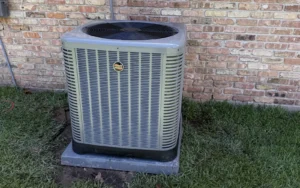
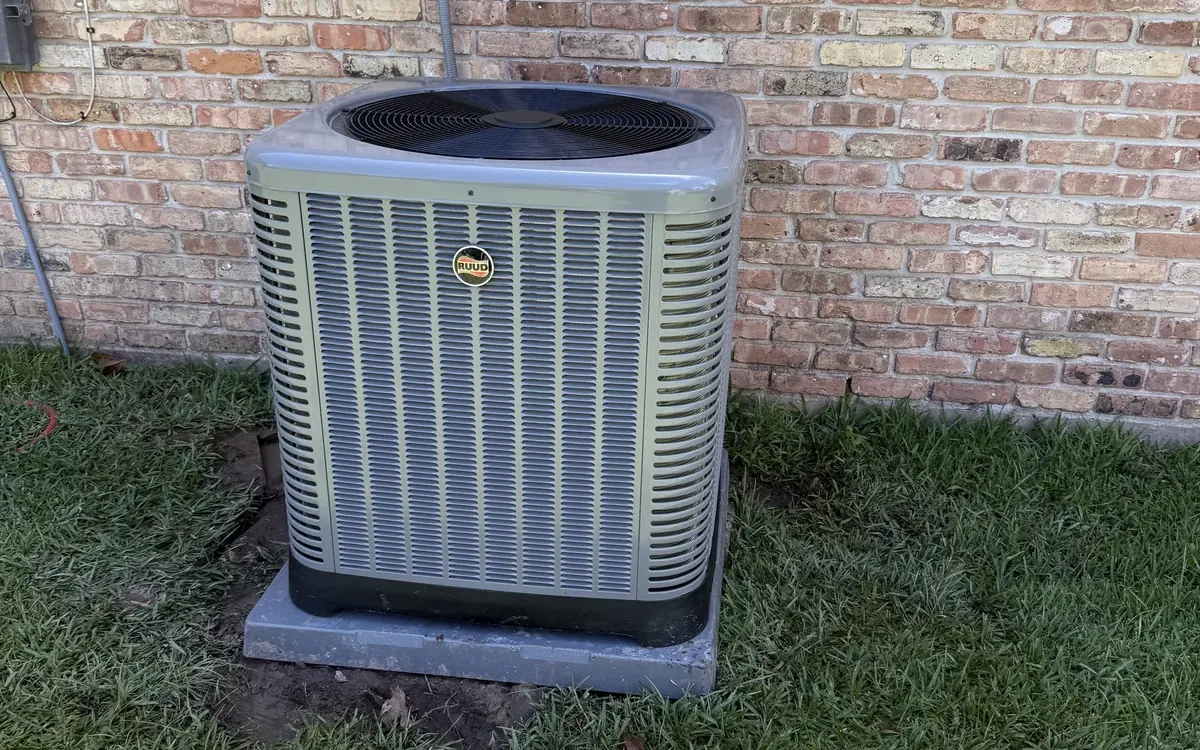
Where the condensing unit lives. A unit on a pad behind the kitchen is quick to reach. One on a roof means ladders or a lift and slower work in a Louisiana summer. Same repair, more labor.
What refrigerant it runs on. Older walk-ins may still run on R-22. EPA’s phaseout schedule ended production and import of HCFC-22 in 2020. Existing equipment can still be serviced, but no new supply is being made. Newer refrigerants are moving too: the AIM Act directs EPA to phase down HFC production and consumption. Your refrigerant affects what a recharge involves and how long the system is worth keeping.
How long it ran while failing. An iced evaporator caught early is a service call. Left for a couple of weeks, it can take the compressor with it.
When it fails, and what is in the box. A box full of product on a Friday night changes the math. Sometimes the right answer is a temporary fix tonight and the permanent repair in daylight. Sometimes the product has to move before anything else happens.
Not sure what you are looking at? Call and tell us what the thermometer reads and what you can see on the evaporator. We will tell you what it sounds like, and if it can safely wait for a daytime visit. Call (225) 772-4703. Book a daytime visit
Should you repair or replace a walk-in cooler?
Most walk-in failures are repairs, and they should be. Replacement comes up when a big failure lands on an older system, or when the same problems keep coming back.
The useful thing to know is that a walk-in is two purchases. The box is the panels, the floor and the door. The refrigeration system is the evaporator, the condensing unit and the controls. A box with dry insulation and a solid floor can often take a new system, which is usually a smaller job than starting over.
When a box itself is failing, with wet or crushed insulation, a soft floor or doors that will not seal, putting a new system on it buys you a new system that works harder than it should.
If you are weighing it up, request an estimate for replacing the refrigeration system and compare it against the repair price on the table. Our financing options cover larger refrigeration work too, so a replacement does not have to wait for a good month.
How maintenance changes the math
Most of the failures above give warning. A gasket tears a little at a time. A condenser coil fills slowly. A drain line runs slow before it freezes. A daily thermometer log catches a box drifting toward 41°F long before the product is at risk.
A scheduled visit is built to catch exactly those. The discipline is the same one we describe in what a real tune-up should include: measured readings, written down, compared against the last visit.
The holiday rush is the worst time for a box to quit. If you want a walk-in looked over before the busy season, our commercial refrigeration team in Baton Rouge handles service, repair and installation, and covers the comfort cooling in the same building.
Walk-in cooler repair questions Baton Rouge operators ask
These are the questions restaurant owners and store managers ask us most often, usually while standing next to a box that is reading warm.
How much does walk-in cooler repair cost in Baton Rouge?
It depends almost entirely on which part failed. A door gasket, a drain line or a thermostat sits at the small end. A refrigerant leak or a compressor sits at the large end. Every bill is built from a diagnostic visit, labor and parts, so ask for the diagnostic charge up front and a price before work starts.
Is it worth repairing an old walk-in cooler?
In most cases, yes, if one part failed and the box itself is sound. Replacement makes more sense when an older system loses its compressor, keeps leaking refrigerant or runs on R-22. Even then, a box with dry insulation and a solid floor may be able to take a new refrigeration system instead of being replaced outright.
Why does refrigerant work cost more on older walk-ins?
Many older systems run on R-22, and EPA’s phaseout ended new production and import of it in 2020, so service relies on existing supply. Any refrigerant job also needs a leak search, a repair, evacuation and a recharge by an EPA-certified technician. Topping off a leaking system without fixing the leak just repeats the bill.
Can I keep using a walk-in that is running above 41°F?
The FDA Food Code sets cold holding for time/temperature control for safety food at 41°F or below, and Louisiana’s retail food guidance uses the same line. Move the product that matters most to a working cooler, log the temperatures, and decide what to keep under your food safety plan. Your parish health unit can advise.
How can I lower my walk-in cooler repair costs?
Catch problems early. Keep a daily temperature log, replace torn gaskets, make sure the door closes on its own, keep the condenser coil clean and the drain line clear. Most expensive failures start as small ones that ran for weeks. A scheduled maintenance visit is built to find exactly those.
Walk-in reading warm? Call Southern Dreams Mechanical. We service walk-in coolers and freezers across Baton Rouge, Denham Springs and Livingston Parish. You get the diagnostic charge up front and a price before any repair starts. Call (225) 772-4703. See our commercial refrigeration service
Last updated October 1, 2026